Inhaltsverzeichnis
- Benefits of DynaClean Food Conveyor Systems
- Choosing the Right Conveyor System for Ensuring Food Safety: Chain or Cable?
- SJF Material Handling Inc.
Most conveyor belts are wide, so a large number of items can be placed on the belt. Food conveyor belts are typically thinner, because food items are generally smaller than items processed in other processing plants. This also helps separate food items, which can be useful when processing the food into a product.
Generally, a food conveyor belt is only found inside a processing plant, but some models also are used in restaurants, particularly in Japan. In automated sushi restaurants, chefs place sushi platters on a food conveyor belt that moves the plates among tables in the restaurant so customers can take the sushi they want from the belt. These belts are generally much thinner than those found in manufacturing plants and are typically wide enough to hold a small plate. PU (polyurethane) is a synthetic material that is commonly used as a food conveyor belt due to its high resistance to abrasion, oil, and chemicals. It is hard to imagine a food processing plant – or indeed any other kind of industrial facility – without a conveyor system. Conveyors are an essential part of most automated production processes, as they provide a quick and efficient way to move materials from one point to another.
Luckily, with conveyors, employees seldom have to interact with them and employees therefore have less risk because they’re not carrying heavy loads. Conveyor rollers support the belt and allow it to move smoothly along the conveyor. Bucket elevators can be either centrifugal or continuous, depending on the type of material being conveyed. Positive pressure systems use a blower or fan to push the material through the pipeline, while negative pressure systems use a vacuum to pull the material through the pipeline.
Training can help reduce downtime and increase your team’s safety, efficiency and productivity levels. Dorner’s expert field services team delivers on-site training in safety, maintenance, troubleshooting and other areas. MIR has specialty fabrication capabilities for conveyor belts manufactured in polyester, polyurethane, silicone, neoprene, Teflon® and other materials for the Baking & Confectionery Industry.
Fusion Tech designs and manufactures custom equipment and layouts for the food processing industry. The best option for finding a durable conveyor is to get one custom designed. “Many newer conveyor systems keep products and foodstuffs free of contaminants by design. For food and beverages, it’s important to keep products dust-free and contamination-free before they go to their final destination. “When it comes to your food, you probably want products that haven’t been directly handled very much. Especially since many modern grocery products come from factories and facilities, conveyors can help improve overall food safety.
- They are not able to handle abrasive, sticky, or wet materials, and can be prone to material segregation and degradation if the material being conveyed is not uniform in size or shape.
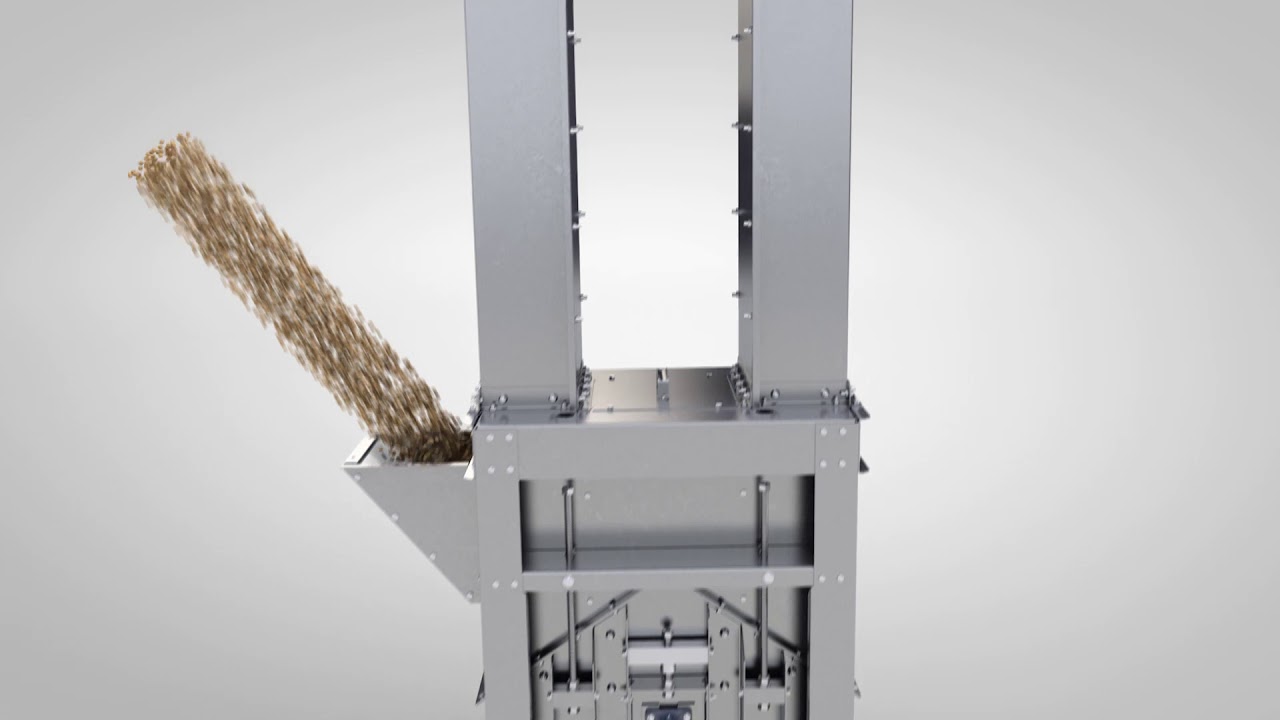
- They are commonly used for industrial purposes for the transportation of a wide range of bulk solids, including grains, flour, sugar, and similar.
- We understand that sanitation and safety rank as two top priorities for every food processing facility.
- By understanding the different variations in components and design of food conveyors, food manufacturers can choose the best conveyor system for their specific application.
- From in-feed and out-feed applications to cooling and inspection solutions, our reliable food grade conveyors will help you get the job done quickly, efficiently, and safely in any category.
- Material is moved through an enclosed conveying line or tube using a combination of pressure differential and airflow from a blower or fan...
Industrial food conveyor belt systems are used to move pre-processed food to processing and sanitation stations, and to move post-processed food into packing stations. This belt is used to handle food, so most regions and countries have sanitation regulations in place to ensure the food does not rot during conveyance and consumers are safe. The belt itself is generally not as wide as other conveyor belts, because food items are generally much smaller than other items moved by a conveyor belt. While this conveyor belt is typically used in processing plants, a food conveyor belt also is often used in Japanese restaurants to rotate sushi plates to every table. In general, food conveyor belts must be made from materials that are safe for use with food products, and that can withstand the harsh conditions of food production facilities. Food-grade conveyor belts that meet FDA and USDA regulations should be used to ensure that food products are not contaminated during transport.
Benefits of DynaClean Food Conveyor Systems
To enhance your facility’s conveyors even more, we can add safety features like ergonomic stands, guards, and shut-off switches. Sparks designs, builds, and installs innovative belt systems that work for even the toughest food-grade applications. There are several types of conveyors to choose from, each with its unique characteristics and applications. The way the material is ‘thrown’ from the buckets into the next machine in the process can compromise blends and lead to poor final product quality. Belt conveyors are also relatively low-maintenance and easy to clean, as they can be easily accessed for cleaning. One advantage of the conveyor belt is its versatility and adaptability to different environments and materials.
Stainless steel conveyors are specified based on criteria such as wash down environments, sanitary applications such as food or pharmaceuticals, and chemical or corrosive product processing. Different finishes are determined by moisture levels and bacterial growth concerns and are subject to FDA, USDA & USDA Dairy, AMI (meat), 3A Dairy, BISSC (bakery), or other compliance as required. Most metal detector manufacturers cannot incorporate the actual conveyor so we offer a value-driven custom built alternative to most standard models or even complex detection systems. Dorner offers a food handling and processing conveyor maintenance program that involves only labor or labor and parts.
Our AquaPruf Ultimate Conveyors have been designed for fast and effective sanitation in the most-demanding environments. These environments generally involve high-pressure sanitation requirements and include dairy and cheese, ready-to-eat foods and/or meat, poultry and seafood products. Our custom food handling equipment is designed by our talented, full-service Engineered Solutions Group. Our team can modify a standard solution to meet your business’ needs or collaborate with you to build a wholly custom system. Dorner’s world-class food handling and processing conveyors are highly sanitary and built to operate at high speeds.
Conveyor speed can be adjusted to suit the requirements of the application. Faster speeds can increase production capacity, but may also increase the risk of product damage or spillage. Spiroflow offers a complete range of mechanical conveying solutions in the industry. The staff at Spiroflow can recommend the best method to meet your conveying needs. Not only do our conveyors’ simplistic designs prevent bacteria build-up, but they also prevent injuries.
The freezer’s output point was high off the floor; from there, the conveyor dropped it down a series of transfer points to get it to floor level. This not only took a lot of space, but sometimes damaged the product by jarring the pizza toppings loose. SideDrive installed a spiral conveyor with a diameter of only about 13 ft. Material handling often isn’t as straightforward as building a conveyor from point A to point B. In other cases, there are a lot of points A and B to take into account, and sometimes they’re not always the same ones, nor in the most convenient places.

We carry four basic types that you can enhance with customizable features. Although we’ve tailored each of our food-grade conveyor belts to fulfill specific roles, we’ve included sanitation and safety features, as well as customizable options, for each one. Ensure your operation meets food safety requirements as well as your production needs with the right equipment from Dorner. We offer training and maintenance services to help you maximize the lifetime of your custom food processing solution and provide you with the resources you need to keep your operation running smoothly. Baking & Confectionery facilities face many complicated https://sepmachinery.com/bucket-elevator/ challenges conveying ingredients, doughs, formed products and packages — often incredibly delicate — through the manufacturing process.
Choosing the Right Conveyor System for Ensuring Food Safety: Chain or Cable?
They were instrumental in keeping the crew motivated during the arduous installation and they worked second shift in order to meet SWRMC’s production schedule. “The most challenging task in conveying is aligning products to feed robotic packaging systems,” Sanchez says. To feed packaging equipment efficiently, bulk product often must be evenly spread across the conveyor, says Rudy Sanchez, process systems product development manager at Key Technology. Tony Maniscalco, business unit leader at SideDrive Conveyor Co., recalled a customer who needed more room for his frozen pizza operation.
We took our years of conveyor knowledge and developed a line of plastic washdown conveyors for processors of snacks, meat, poultry, seafood, dairy, bakery, prepared foods and pharmaceuticals. Increase productivity, reduce waste, and create a safer workplace for workers with a Dorner conveyor system. We offer a range of customizable solutions to maximize your available space, improve the efficiency of your operation, and enhance the hygienic standards of your facility. Dorner is recognized as a leading conveyor manufacturer and also a top food handling and processing conveyor installation company.
These belts are now seen by pioneering organizations such as EHEDG, as unhygienic as well as inferior in terms of costs of ownership. Used correctly, Volta food grade conveyor belts save both cost of ownership and improve food hygiene. Their technological advancements are changing how businesses view food production, transportation, and packaging.